NI AQUÍ, NI ALLÁ
[Neither Here, Nor There]

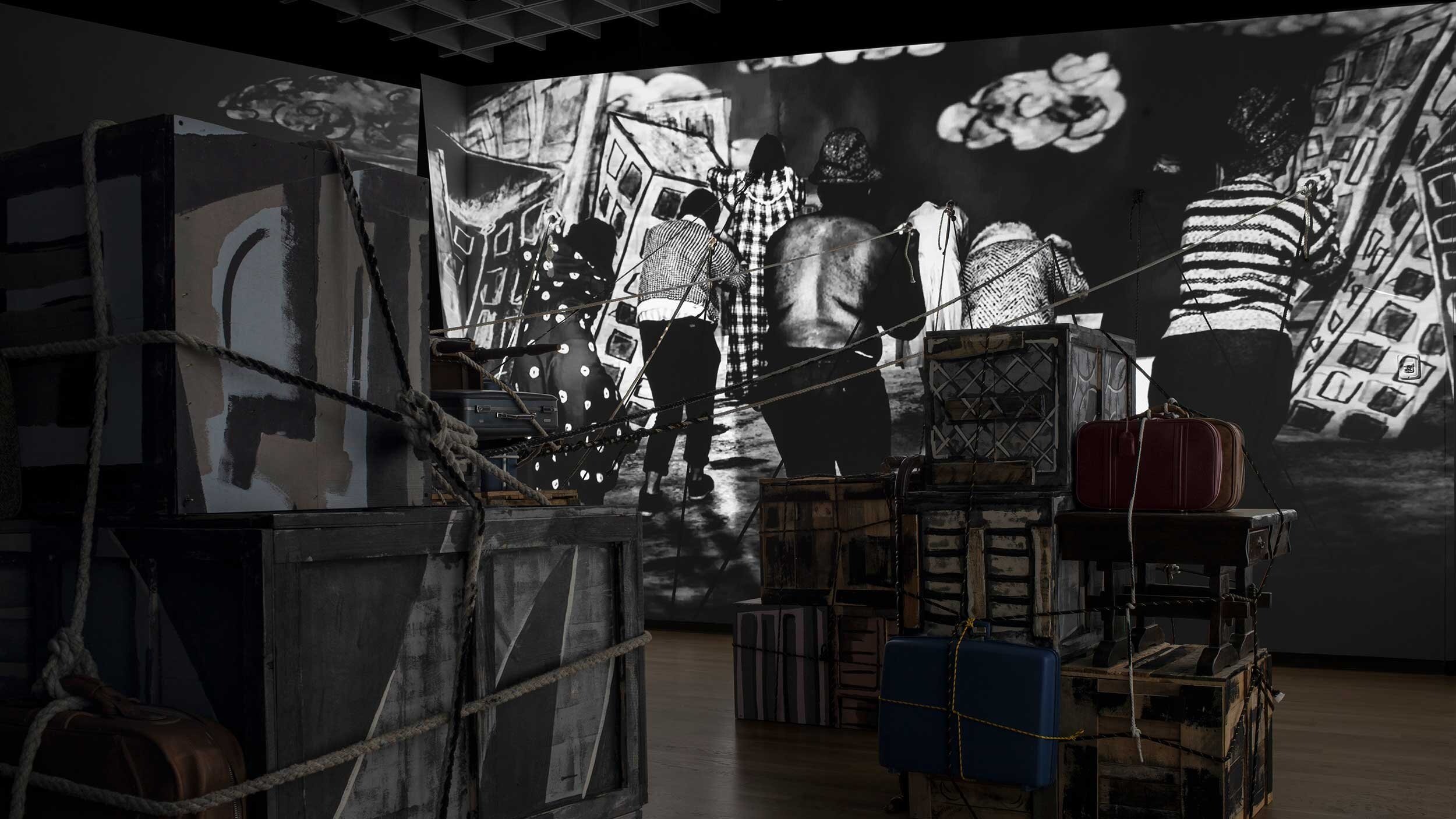
Ni Aqui, Ni Alla, Florida Prize in Contemporary Art, Orlando Museum of Art, Orlando, FL, USA - 2019
-
Multimedia installation: Multichannel video, multichannel audio, rope, luggage, trunks, furniture.
16 minutes
25 x 25 x 17 feet / 762 x 762 x 518 cm
2018
Ni Aqui Ni Alla [Neither Here, Nor There] explores the intersection of migration, materiality, and perception through a haunting, multichannel video installation. The installation features three-dimensional trunks and furniture that are bound together with rope and dragged by human figures, who are projected in black-and-white on the surrounding walls. This creates a striking contrast between the tangible objects and the ephemeral, ghostlike figures that interact with them.The imagery in the installation evokes a sense of endlessness and futility, emphasizing the unrelenting nature of the migrant experience. The migrants in the installation are engaged in a Sisyphean task of hauling their possessions through a never-ending cycle of illustrated cities and forest environments. While the trunks and furniture are tangible objects, they also represent the intangible aspects of migration: memories, culture, and identity. As viewers contemplate the plight of these migrants, they are forced to confront their own assumptions about the relationship between people and the things they carry with them.
The use of video projection in the installation also highlights the complex relationship between materiality and perception. The projected human figures are ethereal and ghostly, and they appear to be "tricks of light." Meanwhile, the physical objects in the installation are solid and real, emphasizing the contrast between the world of the migrant and the world of the viewer. Through this tension between the tangible and the intangible, the installation invites viewers to question their assumptions about the nature of reality and the role of perception in shaping our understanding of the world around us.
The hybrid of dimensions, styles, and palettes in the installation creates a sense of discordance and dialectic. The imagery is intentionally jarring, emphasizing the contrast between different elements and exacerbating the exhaustion and disorientation of the migrant experience. The result is a powerful meditation on the challenges of migration and the complex relationship between materiality, perception, and identity in our contemporary world.